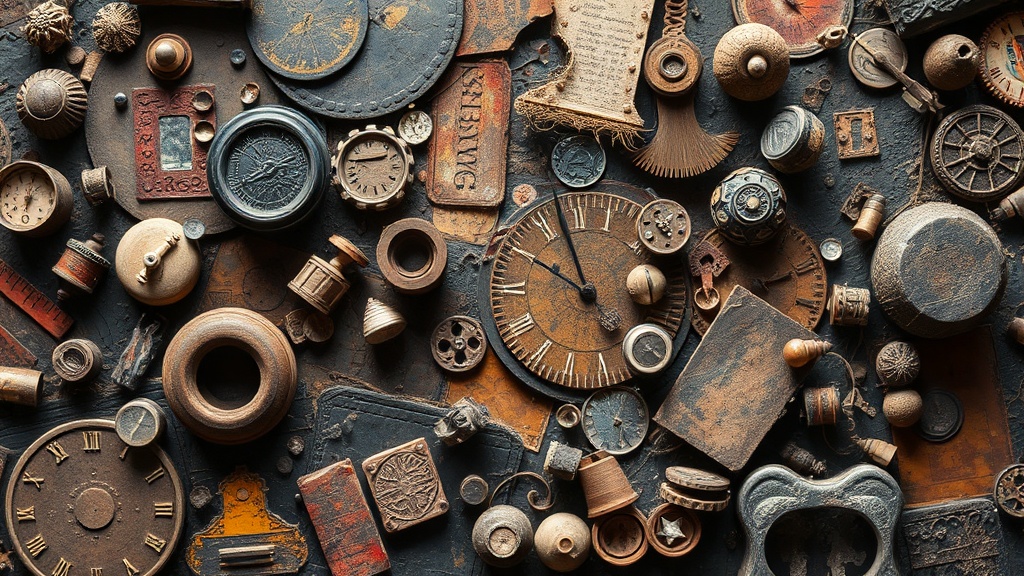
Building Texture with Found Objects and Mixed Media

Cardboard and Paper Scraps
Textiles and Fabric Remnants
Sand and Organic Matter
A painter stands before a canvas, frustrated because the surface looks flat and lifeless despite perfect color application. They reach for a palette knife, but the paint alone isn't providing the physical depth they crave. This is the moment where texture moves from a concept to a physical necessity.
This article explores how to integrate found objects and mixed media into your work to create tactile depth. We'll look at different materials, how to adhere them to a surface, and how to ensure your textures don't compromise the structural integrity of your art. Adding physical layers changes how light hits your work—it's a fundamental shift in how a viewer perceives your art.
What Are the Best Found Objects for Texture?
The best found objects for texture are those that offer varied shapes, weights, and surface qualities without being too heavy for your support. You aren't just looking for "stuff"; you're looking for specific topographic qualities.
Think about the difference between a smooth pebble and a piece of rusted metal. One absorbs light, while the other reflects it. When you're building a piece, you want to consider how these objects interact with your medium. If you're working with heavy-duty acrylics, you can use much denser materials than you could with watercolor.
Here are a few categories of objects that work well:
- Organic Matter: Dried leaves, sand, crushed eggshells, or even coffee grounds. These provide a gritty, natural feel.
- Textile Scraps: Burlap, lace, or frayed denim. These add a softness or a repetitive pattern that paint alone can't mimic.
- Industrial Debris: Sandpaper, mesh, or even old wire. These are great for creating rigid, geometric textures.
- Paper Products: Torn newsprint, tissue paper, or corrugated cardboard. These add structural layers that can be painted over.
One thing to keep in mind is the weight. If you're working on a thin canvas, don't go overboard with heavy stones or thick metal pieces. You'll endate up with a sagging mess. If you want to experiment with heavier elements, consider a wooden panel or a Masonite board for better stability.
How Do You Attach Mixed Media to a Canvas?
You attach mixed media to a canvas by choosing an adhesive that matches the weight and porosity of the object you're using. Not all glues are created equal, and using the wrong one is a recipe for a piece that falls apart in a year.
For light objects like tissue paper or thin fabric, a standard matte medium works wonders. For heavier items like sand or small pebbles, you'll need something with more "grab." Many artists use heavy gel mediums or even specialized construction-grade adhesives for extreme cases. (Though, honestly, stick to art-grade products to avoid unexpected chemical reactions with your paint.)
Here is a quick reference for choosing your adhesive based on the material:
| Material Type | Recommended Adhesive | Effect/Result |
|---|---|---|
| Paper/Tissue | Matte Medium | Seamless, integrated look |
| Sand/Fine Grit | Acrylic Gel Medium | Uniform, embedded texture |
| Heavy Fabric/Burlap | Heavy Gel or Fabric Glue | Strong, permanent bond |
| Wood/Hard Objects | Gel Medium + PVA Glue | Structural stability |
The process usually involves applying the medium to the surface, placing the object, and then applying more medium over the top to "lock" it in. This creates a sandwich effect that protects the object from the air and prevents it from peeling off later. If you're working with highly textured surfaces, you might find it helpful to revive your brushes frequently, as the thick mediums can clog them quickly.
Does Texture Affect the Longevity of the Art?
Texture can affect longevity if the materials used are prone to oxidation, decay, or if the weight causes the support to warp. To ensure your art lasts, you must select stable, pH-neutral materials and use high-quality binders.
Organic materials like leaves or food products are risky. They might look great today, but they can rot or change color over time. If you want to use these, you have to treat them first. For example, many artists use a clear sealant or a coat of resin to "freeze" the object in time. This prevents the air from reaching the material and causing degradation.
Also, consider the "acid" factor. Using old newspaper or low-quality paper scraps can introduce acid into your work, which eventually turns the paper yellow and brittle. Always check the archival quality of your materials. If you're working with pigments, remember that certain textures can trap moisture, which might lead to mold if the piece isn't dried properly. It's a bit of a balancing act—adding depth while maintaining stability.
If you're worried about the visual impact of the texture, you might want to experiment with how color interacts with it. A highly textured surface can make colors look much darker because of the shadows created in the crevices. If you're interested in how to manage color in more complex ways, check out my post on mastering the split primary palette.
The goal isn't just to add "stuff" to a canvas. It's to create a cohesive visual language. A piece of burlap shouldn't just look like a piece of burlap glued to a painting; it should feel like an intentional part of the composition's rhythm. You can achieve this by painting over the object once the adhesive is dry. This integrates the texture into the color scheme, making it look like it's part of the original surface rather than an afterthought.
One technique I love is using a "wash" over the texture. Once your sand or fabric is stuck down, take a very thin, watery layer of paint and brush it over the top. The paint will settle into the low points of the texture, naturally highlighting the high points and creating a sense of depth that looks organic. It's a simple trick, but it makes a huge difference in the final professional look.
Don't be afraid to get messy. The beauty of mixed media is the unpredictability. Sometimes the most interesting textures come from a mistake or an unexpected reaction between a gel medium and a piece of scrap metal. Keep a "junk drawer" of materials nearby—scraps of twine, old buttons, or even crushed aluminum cans. These aren't just trash; they're potential layers in your next piece.