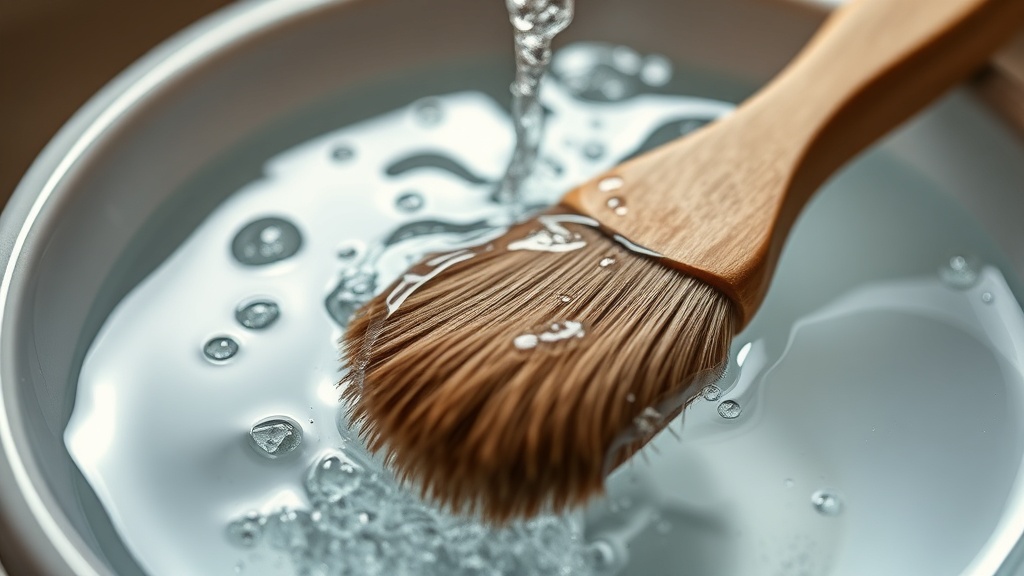
Reviving Dull Brushes with a Simple Warm Water Soak

Quick Tip
A gentle soak in warm, soapy water can reshape bristles and restore much of their original bounce.
You'll learn how to restore the shape and flexibility of your paintbrushes using a simple warm water soak. This technique works best for synthetic or natural hair brushes that have become stiff due to dried pigment or residue. It’s a quick way to save your tools before you decide to toss them.
How Do I Fix Stiff Paintbrushes?
Soaking your brushes in warm, soapy water for several minutes is the most effective way to loosen dried paint. Most artists deal with this when using mediums that dry quickly. You'll want to use a gentle, pH-neutral soap—something like Dr. Brush or even a mild dish soap—to ensure you don't damage the ferrule or the hair fibers.
Here is the process I follow when my brushes start feeling a bit "crunchy":
- Fill a shallow container with lukewarm water (not boiling, or you'll melt synthetic bristles).
- Add a small drop of mild soap to the water.
- Submerge only the bristles—avoid getting water inside the metal ferrule.
- Let them sit for 5 to 10 minutes.
- Gently massage the bristles with your fingers to work out the pigment.
- Rinse thoroughly under running water.
It’s a bit of a tedious process if you have a dozen brushes to fix, but it's much cheaper than buying a new set of high-quality paintbrushes every month. If the bristles are still stiff after a soak, the pigment might be permanently embedded in the core of the hair.
Can I Use Hot Water for Brushes?
No, you should never use boiling or extremely hot water because it can damage the adhesive inside the ferrule. While heat helps loosen dried acrylic, a gentle warmth is much safer for the structural integrity of the brush. If you're working with heavy-duty tools, you might want to check the specific care instructions on the Winsor & Newton website to see how they recommend treating their professional lines.
Quick Comparison: Brush Care Methods
| Method | Best For | Risk Level |
|---|---|---|
| Warm Water Soak | Dried Acrylic/Oil | Very Low |
| Brush Cleaner/Solvent | Stubborn Oil Paint | Moderate |
| Deep Cleaning Solution | Professional Grade Brushes | Low |
The goal is to restore the "spring" to the bristles. If you've been working on acrylic pour paintings, you know how quickly the medium can harden. A quick soak can often bring a brush back to life even after a heavy session.
How Often Should I Clean My Brushes?
You should clean your brushes immediately after every single use to prevent pigment from drying deep within the bristles. Waiting until the next day is a mistake most beginners make—and it's a hard habit to break once the paint has dried. A quick rinse during a break can prevent the need for a long soak later.
Keep your tools in good shape, and they'll keep your work looking sharp.