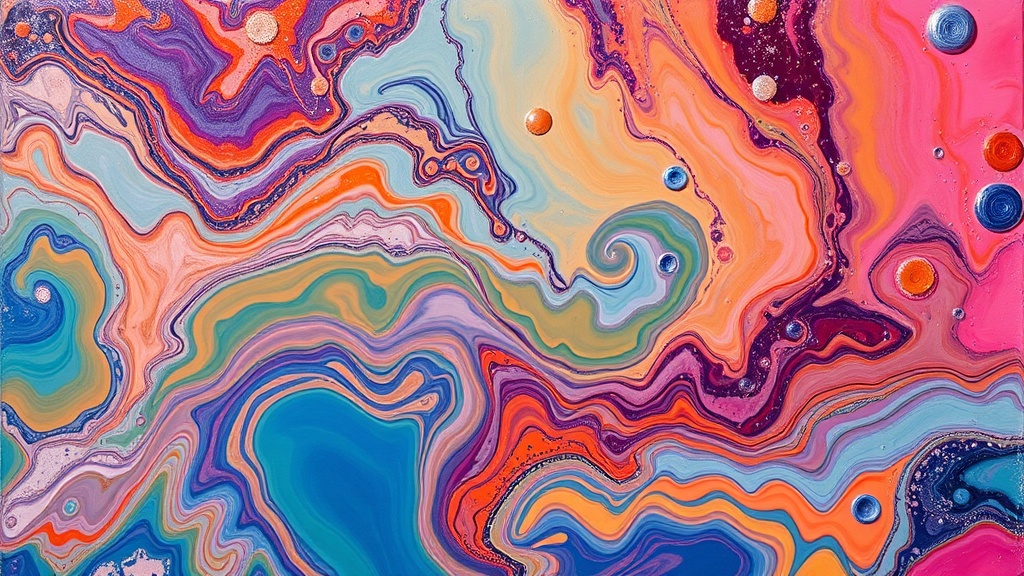
How to Create Stunning Acrylic Pour Paintings at Home

What Supplies Do You Actually Need for Acrylic Pour Painting?
You'll need five core items: acrylic paints, a pouring medium, silicone oil, canvases, and basic tools like cups and sticks. The technique creates mesmerizing, abstract patterns by mixing fluid acrylics and pouring them onto a surface — no brushes required. The results are unpredictable (and that's half the fun), producing cells, swirls, and organic designs unique to each piece.
Here's the thing — not all acrylics work equally well. Heavy-body paints from brands like Liquitex or Golden need significant thinning before they'll flow properly. Many beginners grab cheap craft paints from Michael's or Walmart to start. They work fine for practice, though the color saturation won't match artist-grade alternatives.
The pouring medium matters more than most people think. This clear liquid extends the paint without breaking its binder — water alone weakens the finish and causes cracking. Floetrol, a latex paint additive found at Home Depot for about $8 per quart, has become the unofficial favorite among pour artists. GAC 800 from Golden reduces crazing (those fine cracks that appear as paint dries). Some artists mix both.
Silicone creates the distinctive cells — small, circular patterns that bubble up through the paint layers. A few drops of 100% silicone treadmill belt lubricant (available on Amazon from brands like Spot On) or even coconut hair serum works. Don't overdo it. Two to three drops per color cup is plenty.
For surfaces, standard stretched canvases work, but they warp under heavy paint loads. Many experienced pourers prefer wood panels from Ampersand or canvas boards for stability. Plastic cups, popsicle sticks, and a butane torch round out the basic toolkit.
| Supply | Budget Option | Professional Choice | Approximate Cost |
|---|---|---|---|
| Pouring Medium | Floetrol (Home Depot) | Golden GAC 800 | $8 vs. $25 per quart |
| Acrylic Paint | Apple Barrel (Walmart) | Golden High Flow | $1 vs. $6 per 2oz |
| Silicone for Cells | Coconut hair serum | Spot On Treadmill Lubricant | $4 vs. $12 |
| Surface | Canvas boards (5-pack) | Ampersand Gessobord | $10 vs. $35 |
| Torch | Crème brûlée torch (kitchen store) | Blazer micro torch | $15 vs. $40 |
What's the Best Paint Consistency for Successful Pours?
The paint should flow like warm honey — thick enough to coat a stir stick but thin enough to drip off in a steady stream. Getting this consistency right separates successful pours from muddy disasters. Too thick, and the paint won't spread or cell properly. Too thin, and colors blend into a gray-brown mess.
There's no universal ratio because paints vary enormously in viscosity. A good starting point: mix one part paint to two parts pouring medium. Stir thoroughly (two minutes minimum — no shortcuts), then lift the stick. The paint should form a mound that sinks back into the cup within a few seconds. If it sits on top like whipped cream, add more medium. If it disappears immediately, you've gone too far.
The catch? Different colors from the same brand often need different amounts of medium. Titanium white — loaded with heavy pigment — typically needs more thinning. Blues and reds usually require less. You'll need to adjust each color individually rather than mixing one batch for everything.
Many artists swear by the "flip cup" method for testing consistency. Fill a cup with layered colors, flip it onto the canvas, and lift. The paint should spread to the edges within 30 seconds with minimal tilting. If you're shaking the canvas like a pan of popcorn, the mixture needs work.
Common Consistency Mistakes
- Over-thinning with water — Weakens paint film, causes cracking within weeks
- Under-mixing — Leaves clumps that create bare spots on the finished piece
- Inconsistent ratios across colors — Makes cells uneven and causes some colors to sink while others float
- Rushing the test — Patience here saves ruined canvases later
Which Acrylic Pour Techniques Work Best for Beginners?
Start with the dirty pour flip cup — it's forgiving, dramatic, and teaches color interaction fundamentals. This technique involves layering different paint colors in a single cup, then flipping it onto the canvas. The weight of the paint creates pressure that pushes colors outward in unpredictable patterns.
The basic process takes about ten minutes of active work (plus drying time). Layer four to six colors in a plastic cup — think of pouring heavy cream into coffee, how it settles in distinct bands. Add one drop of silicone to two or three colors (not all). Place the canvas face-down on the cup, hold both together, and flip. Wait ten seconds for the paint to settle, then lift straight up. Tilt the canvas slowly, letting gravity spread the paint toward the edges.
Worth noting: the torch isn't just for show. Passing a flame 6-8 inches above wet paint pops air bubbles and activates cell formation. The heat causes silicone to rise through paint layers, dragging color with it. Move quickly — lingering too long scorches the surface or over-activates cells into a chaotic mess.
Once comfortable with flip cups, try the swipe technique. Pour paint lines across the canvas, then drag a wet paper towel, palette knife, or piece of acetate across the surface. This forces colors to interact along a clean edge, creating feathered, flame-like patterns. The ring pour — slowly pouring paint in a circular motion from a raised cup — builds concentric designs reminiscent of tree rings or geological cross-sections.
Dick Blick Art Materials offers technique tutorials alongside their pouring supplies, and their video demonstrations break down each method clearly.
Technique Quick Comparison
| Technique | Difficulty | Cell Production | Best For |
|---|---|---|---|
| Dirty Pour Flip Cup | Beginner | High | First attempts, learning color behavior |
| Swipe | Intermediate | Medium | Controlled patterns, landscape effects |
| Ring Pour | Beginner | Low | Geometric designs, color separation |
| Tree Ring Pour | Advanced | Variable | Detailed, layered compositions |
| Dutch Pour | Intermediate | Low | Soft, cloud-like backgrounds |
How Do You Prevent Common Acrylic Pour Problems?
Most failures stem from three causes: improper surface prep, environmental factors, and impatience during drying. Understanding these prevents the heartbreak of watching a beautiful pour crack, yellow, or develop silicone bald spots days later.
Surface preparation starts with leveling. Pour paintings self-level to an extent, but a tilted canvas creates uneven thickness — thick areas crack, thin areas show the substrate. Use a spirit level on both axes. Place painter's pyramids or plastic cups under the corners to elevate the canvas (pools of paint will drip off edges, so protect the floor).
Dust is the enemy. Wet acrylic acts like a lint roller, grabbing every airborne particle. Dry conditions cause skin to form on the surface while underlying paint remains wet — this traps moisture and creates cracks. Ideal conditions: 70-75°F with 50% humidity. Run a humidifier in winter. Cover drying pieces with a cardboard box (propped up for airflow) to block dust without touching the surface.
"The biggest mistake I see new pourers make is touching the painting too soon. Acrylic feels dry to the touch in hours but cures for weeks. That fingerprint you left admiring your work? It'll be there forever." — Advice from the Austin Art Guild workshop series
Silicone removal requires attention. After 24-48 hours of drying, wipe the entire surface with a solution of dish soap and warm water, then rinse clean. Any remaining silicone prevents varnish from adhering properly. Some artists skip silicone entirely for this reason, using alcohol or specialized cell-producing mediums instead.
That said, not all cracking is failure. Controlled crazing — fine, web-like patterns — adds texture and interest. The Japanese aesthetic of wabi-sabi embraces these imperfections. But large cracks indicating structural weakness? Those come from poor paint consistency or temperature shocks during curing.
What's the Right Way to Finish and Protect Acrylic Pour Art?
Wait at least two weeks (preferably three) before varnishing to ensure complete curing. Acrylic pour paintings dry to the touch within 24-72 hours, but the thick layers common in this technique trap moisture deep inside. Sealing too early locks in water vapor, causing cloudiness or adhesion failure months later.
Resin provides the most striking finish — glass-like depth that makes colors pop and protects against UV damage. ArtResin dominates the market for good reason: it's non-yellowing, self-leveling, and produces minimal bubbles. The process intimidates beginners (mixing ratios matter, and bubbles require torching), but the results justify the learning curve. Expect to spend $40-60 for enough resin to cover several medium canvases.
Spray varnishes offer easier application. Krylon UV-Resistant Clear or Liquitex Professional Spray Varnish work well in 3-4 thin coats. The finish isn't as deep as resin, but it's more forgiving and significantly cheaper. Brush-on varnishes risk reactivating acrylic layers and creating streaks — if using them, apply with a soft foam brush in one direction only.
When displaying pour art, avoid direct sunlight even with UV protection. The high pigment loads in pouring paints — particularly fluorescent and metallic colors — fade faster than traditional paintings. Frame without glass (which creates reflections that obscure the glossy surface) or mount on float frames that show the painted edges.
Your first pours won't look like Instagram masterpieces. That's normal. The fluid art community shares thousands of "failed" pieces that taught their creators something valuable. Each pour builds intuition about color density, flow patterns, and timing. Keep records — photos of mixtures, ratios, and results — because happy accidents can't be replicated from memory alone.
Steps
- 1
Gather Your Supplies and Prepare Your Workspace
- 2
Mix Your Acrylic Paints with Pouring Medium
- 3
Pour and Manipulate the Paint to Create Your Design