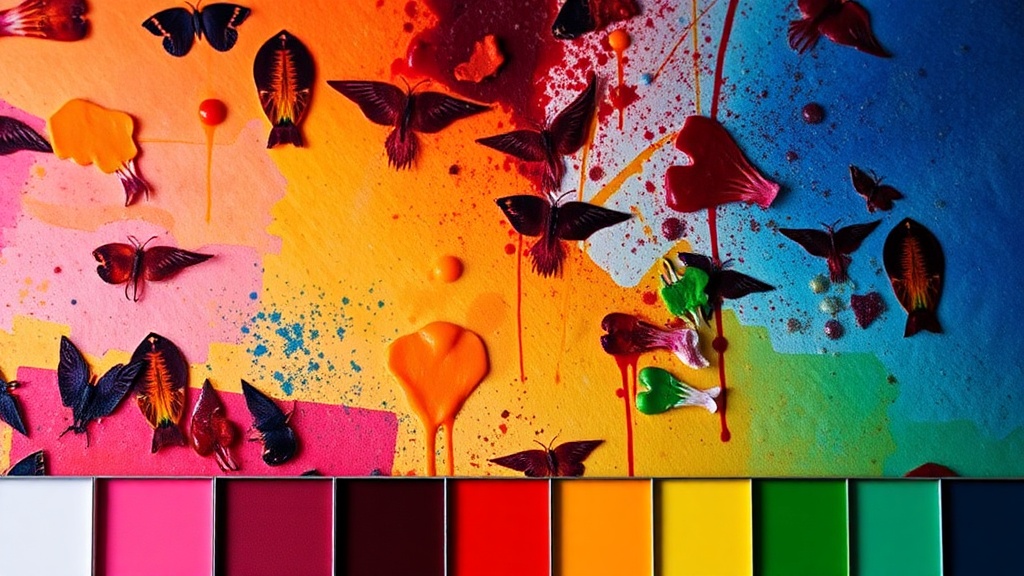
Master the Art of Color Mixing with the Split Primary Palette

Quick Tip
Use a warm and cool version of each primary color to mix any hue with maximum vibrancy.
Color mixing doesn't have to feel like guesswork. The split primary palette—a system using two versions each of red, yellow, and blue—solves the muddy mixtures that plague traditional color wheels. This post breaks down how to build this six-color setup and why it produces cleaner secondaries than any three-paint combination.
What Is a Split Primary Palette?
A split primary palette uses warm and cool versions of each primary color: a warm red (cadmium red medium), a cool red (quinacridone magenta), warm yellow (cadmium yellow medium), cool yellow (cadmium yellow light or lemon), warm blue (ultramarine), and cool blue (phthalo or cerulean). This pairing strategy maximizes color temperature range without overwhelming the mixing surface.
Here's the thing—temperature matters more than hue names. A "red" that leans orange won't mix a clean violet. A "blue" with green undertones dulls oranges before they even dry. By splitting primaries along temperature lines, you gain predictive control. You know exactly which combination yields a saturated purple versus a grayed one.
How Do You Mix Clean Secondaries Every Time?
Match cool primaries with cool primaries, warm with warm. Cool red plus cool blue equals a vibrant violet. Warm red plus warm yellow produces fiery oranges that pop off the canvas. Cross temperatures—warm red into cool blue—and you'll create neutralized browns and grays intentionally rather than by accident.
Worth noting: the split system isn't about owning more paint. It's about strategic selection. Many painters waste tubes on convenience colors they could mix in seconds. The six-color approach forces understanding of underlying pigments. That knowledge transfers across brands, from Winsor & Newton professional lines to student-grade Blick Studio equivalents.
| Color Goal | Mix This | Avoid This |
|---|---|---|
| Bright Orange | Cadmium Red Medium + Cadmium Yellow Medium | Quinacridone Magenta + Lemon Yellow |
| Clean Violet | Quinacridone Magenta + Ultramarine Blue | Cadmium Red + Phthalo Blue |
| Vibrant Green | Phthalo Blue + Cadmium Yellow Light | Ultramarine + Cadmium Yellow Medium |
| Neutral Brown | Cadmium Red Medium + Ultramarine Blue | Adding black to orange |
What Brands Work Best for Split Primary Setup?
You don't need $40 tubes from Schmincke to start. A practical beginner kit runs under $50: Winsor & Newton Cotman tubes in cadmium hues (the non-toxic alternatives work fine), a quinacridone magenta, ultramarine, and phthalo blue. Golden's Fluid Acrylics offer excellent pigment load if you're working on canvas panels. Oil painters should consider Gamblin's 1980 line—pure pigments at half the price of artist series.
The catch? Student-grade cadmiums are often hue formulations—mixtures mimicking the real pigment. Check the label. If it says "cadmium yellow hue," it's a blend. These can shift unexpectedly when mixed. Real cadmiums (look for PR108, PY35, PY37 on the tube) remain stable and predictable.
Set up your palette with warm colors on one side, cool on the other. Don't over-mix on the surface—let optical blending happen on the painting itself. Clean brushes between temperature shifts. And remember: a limited palette teaches more about color relationships than twenty tubes ever will.