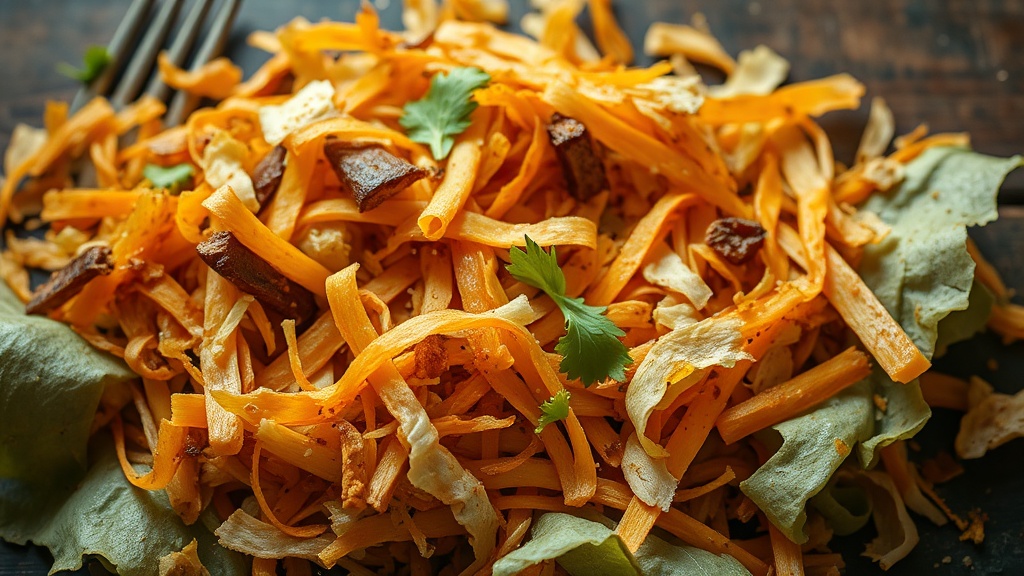
Unexpected Textures from Kitchen Scraps

Salt Granules for Watercolor Diffusion
Rice Grains for Sculptural Relief
Flour Paste for Thickened Surface Texture
A painter stares at a flat, uninspiring wash of ochre, realizing the surface lacks the grit needed to make the light pop. They reach for a heavy-body acrylic, but it’s too expensive to waste on a background experiment. This is where the kitchen becomes a studio supply store. We’re looking at how organic kitchen scraps—things you'd usually toss in the compost—can actually create high-end, tactile textures in your mixed media work.
Using food waste in art isn't just about being "green." It’s about finding structural complexity that synthetic mediums can't replicate. From the gritty residue of dried coffee to the fibrous structural integrity of onion skins, these materials add a layer of physical history to your canvas. It's about moving beyond the brush and into the realm of physical manipulation.
What Kind of Kitchen Scraps Make Good Art Textures?
The best kitchen scraps for art are those that offer either a granular residue or a strong, fibrous structure when dried.
When you're looking for texture, you aren't just looking for "stuff" to glue down. You're looking for a specific visual language. For instance, certain spices create a speckled, organic grit that looks much more natural than store-bought texture pastes. If you want to experiment with organic pigments, you might also enjoy creating botanical textures with natural pigments to see how plant life translates to paper.
Here are the top contenders for your next experimental session:
- Coffee Grounds: These provide a fine, dark, granular texture that works beautifully when mixed with a clear gel medium or used as a dry pigment.
- Dried Eggshells: Crushed eggshells offer a jagged, calcified texture that mimics stone or cracked earth.
- Onion Skins: These are incredibly thin and translucent, perfect for layering or creating a parchment-like effect.
- Tea Leaves: Similar to coffee, but often larger and more structural, providing a more "leafy" or organic feel.
- Salt: While technically a mineral, salt is a kitchen staple that creates crystalline patterns when dropped into wet watercolor or ink.
It's a bit of a science, really. You have to consider how the material reacts to moisture and binders. A pile of dry coffee grounds won't stick to a canvas on its own—you'll need a medium to hold it in place.
The Role of Binders and Adhesives
To make these scraps stay on your surface, you need a reliable adhesive. If you're working with heavy textures like eggshells, a standard glue stick won't cut it. You'll want to look at something with more "tooth."
I usually reach for a heavy-body matte medium or a high-quality PVA glue. If you're working on a larger scale, a modeling paste can help bridge the gap between the organic scrap and the canvas. Don't forget that the more weight the material has, the more structural support your substrate needs. A flimsy piece of sketchbook paper will buckle under the weight of wet coffee grounds and glue.
How Do You Use Coffee Grounds for Texture?
You can use coffee grounds either as a dry additive in a thick medium or as a stain to create depth in your washes.
There are two main ways to approach this. First, the "wet" method: mix the grounds directly into a clear acrylic gel or a matte medium. This creates a sludge-like consistency that you can smear across the surface to create a raised, bumpy topography. This is great for adding grit to a landscape or a dark, moody background.
The second way is the "staining" method. This is more about color than physical height. If you've already experimented with mixing custom tones with coffee stains, you know that the liquid itself carries a beautiful, sepia-toned warmth. To get a textured look with stains, try sprinkling the dry grounds onto a wet wash of coffee-tinted water. The grounds will settle into the "valleys" of the paper, creating a natural, uneven distribution of color and grit.
Pro-Tip: Make sure your grounds are completely dry before you start. Damp grounds can lead to mold issues if you're working on a canvas that you intend to keep for years. If you're worried about longevity, a quick pass in a low-heat oven can dry them out completely.
Is It Safe to Use Food Scraps in Mixed Media?
Using food scraps is generally safe, provided you use them as a surface texture rather than a long-term structural element in a delicate piece.
The main concern is organic decay. If you use actual pieces of fruit or vegetable matter—like a piece of a banana peel or a slice of apple—it will eventually rot, even if it's dried. This is why I recommend using the residue or the dried skins rather than the fleshy parts. The skins are much more stable once the moisture is removed.
If you are working on a professional commission, you might want to stick to "inert" versions of these textures. For example, instead of using actual crushed eggshells, you could use crushed white marble or calcium carbonate to get a similar look without the risk of biological breakdown. You can check the CDC website for general guidelines on handling organic materials if you're ever unsure about mold or bacterial risks in a studio setting, though for most artists, the risk is purely aesthetic.
| Material | Visual Effect | Best Use Case | Difficulty |
|---|---|---|---|
| Coffee Grounds | Granular, dark, gritty | Backgrounds, Earthy textures | Easy |
| Eggshells | Cracked, stone-like, jagged | Creating "cracked" effects | Moderate |
| Onion Skins | Translucent, papery, thin | Layering, light-play | Hard |
| Salt | Crystalline, speckled | Watercolor washes, nebula effects | Easy |
The table above should give you a quick reference for what to grab from the pantry. Note that "Hard" doesn't mean it's impossible; it just means you need more precision with your application.
Dealing with the "Mess" Factor
Let's be honest: working with these materials is messy. There is no way around it. You'll get coffee grounds in your hair, or salt in your carpet. I always keep a dedicated "texture tray" or a heavy-duty silicone mat on my desk when I'm doing this. It keeps the chaos contained.
One thing to watch out for is the "muddy" look. If you mix too many textures together—say, coffee grounds and salt in the same area—you might lose the definition of both. It's better to choose one star of the show. If you want a textured background, let the coffee grounds do the heavy lifting. If you want a subtle, crystalline shimmer, stick to the salt.
If you find your layers are looking a bit chaotic or lacking clarity, you might want to revisit fixing muddy layers. Even though that post focuses on digital work, the principle of color and texture clarity applies to physical media too. You want to ensure your textures aren't just a pile of brown mush, but a deliberate part of your composition.
The Longevity of Organic Textures
When you use these materials, you're making a choice about the life of your artwork. A piece with actual organic matter might change over time. It might darken, or it might become more brittle. This is a part of the "living art" philosophy.
If you want to preserve the texture, a heavy application of a UV-resistant spray varnish or a thick acrylic gloss can help seal the materials away from oxygen and moisture. This is particularly important for things like onion skins or tea leaves. If you don't seal them, the air in your studio can quickly turn a beautiful amber wash into a dull, brownish mess.
Think about the visual weight of your piece. A heavy texture like eggshells adds a physical dimension that changes how light hits the work. Depending on the time of day, your painting might look completely different at 4 PM than it did at 10 AM. That's the beauty of it—it's not a static image. It's a physical object.