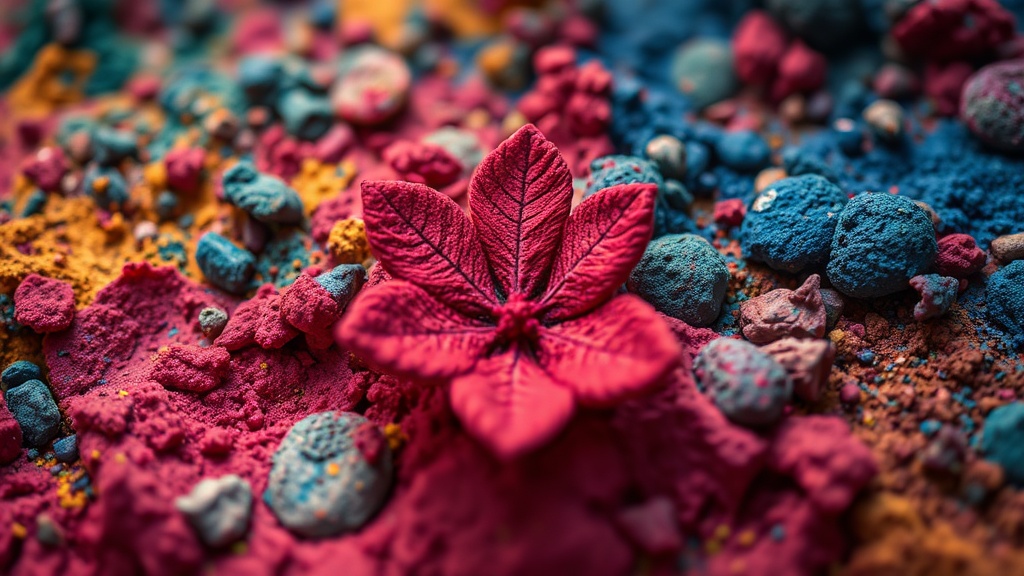
Creating Botanical Textures with Natural Pigments

In this guide, you'll learn how to extract vibrant, organic colors from plants and minerals to create sophisticated botanical textures in your artwork. We'll cover the science of pigment extraction, the tools you need for a home studio, and how to stabilize these colors so they don't fade on your canvas or paper. This process isn't just about making color; it's about adding physical depth and organic variation to your visual compositions.
Working with natural pigments is a different beast than using a tube of Winsor & Newton watercolor. You're dealing with living chemistry. If you don't get the pH balance right, your deep forest green might turn into a muddy yellow overnight. It’s a bit of a balancing act, but the tactile results are worth the extra effort.
What Materials Do I Need for Natural Pigment Extraction?
To start making your own paints, you'll need a basic kit of heat-stable containers, a fine mesh strainer, and a variety of organic matter like onion skins, turmeric, or even charred wood. You don't need a professional laboratory setup, but having a dedicated set of kitchen tools—specifically things you don't plan to eat off of again—is a smart move.
Here is a breakdown of the foundational supplies:
- The Source Material: This can be anything from avocado pits (which yield a surprisingly beautiful dusty pink) to red cabbage or even iron-rich clay.
- A Heat Source: A double boiler or a slow cooker works best to prevent scorching your pigments.
- Binding Agents: You'll need something to hold the pigment to the surface. Gum Arabic is the gold standard for watercolors, but you can also use egg yolk for traditional tempera-style work.
- Filtration Tools: A high-quality cheesecloth or a fine mesh sieve is a must.
- pH Modifiers: This is the secret sauce. Vinegar (acidic) and baking soda (alkaline) allow you to shift the colors of certain plant extracts.
If you're curious about the chemical properties of specific dyes, the Wikipedia page on natural dyes offers a deep dive into how different mordants affect color. It's a great way to see why certain plants react differently to heat or light.
How Do I Extract Pigments from Plants?
The most reliable way to extract pigment is through a process of simmering and straining. You're essentially boiling the color out of the organic matter and then capturing that concentrated liquid to be dried or used as a binder-ready pigment.
Follow these steps to get consistent results:
- Preparation: Chop your organic material into small, uniform pieces. The smaller the pieces, the more surface area you expose to the liquid.
- Simmering: Place your material in a pot with enough water to cover it. Simmer on low heat for at least an hour. Don't let it boil violently—you want to extract the color, not burn the organic matter.
- Straining: Pour the mixture through a cheesecloth into a clean glass jar. Press the solids to get every last drop of color out.
- Concentrating: If the color is too light, return the liquid to a low-heat pan and simmer until it reduces to a thick, syrupy consistency.
- Stabilizing: This is where the magic happens. Add a tiny bit of vinegar to see the color shift. For example, if you're using red cabbage, adding an acid will turn the pigment bright pink.
The catch? Natural pigments can be temperamental. One batch of turmeric might be bright neon yellow, while the next is a burnt ochre. This variability is actually what gives botanical art its character. Don't try to fight it; embrace the slight shifts in hue.
The Role of Mordants and Binders
A pigment by itself is just a powder or a liquid. To make it "paint," you need a binder. If you're working with liquid extracts, you'll often need to evaporate the water until you have a concentrated "stain," or mix the liquid with a binder like Gum Arabic to create a functional watercolor.
A mordant is a substance that helps the pigment stick to the fiber or paper. Without a mordant, your beautiful botanical wash might just wash right off the page the next time it gets damp. Alum is a common, safe mordant used by many artists to ensure longevity.
Which Plants Produce the Best Colors?
The best plants for pigment extraction are those with high concentrations of anthocyanins or tannins, as these provide more stable and vibrant hues. You aren't just looking for "pretty" colors; you're looking for pigments that can withstand the drying process.
| Plant Source | Resulting Color | Complexity Level |
|---|---|---|
| Red Cabbage | Blue, Purple, Pink | High (Highly pH sensitive) |
| Turmeric | Vibrant Yellow/Orange | Low (Very stable) |
| Black Walnut Hulls | Deep Brown/Sepia | Low (Extremely permanent) |
| Avocado Pits/Skins | Dusty Rose/Peach | Medium (Requires oxidation) |
| Spinach/Green Leaves | Muted Olive/Yellow | High (Hard to stabilize) |
Note that "complexity level" refers to how much you'll have to play with the pH to get the exact shade you want. Turmeric, for instance, is almost impossible to mess up—it's a reliable, stubborn yellow. Red cabbage, on the other hand, is a total diva. One drop of lemon juice and your purple turns pink. It's a lot of fun to experiment with, but it can be frustrating if you're aiming for a specific, rigid palette.
For those interested in the professional application of these pigments in the textile industry, the EPA provides resources on the environmental impact and safety of various dye types. It's worth checking out if you're worried about the "clean" aspect of your art supplies.
How Can I Prevent My Natural Colors From Fading?
To prevent fading, you must use a combination of high-quality binders and, where possible, UV-protective varnishes or fixatives. Natural pigments are often "fugitive," meaning they can fade when exposed to light over time. This is the primary trade-off for using organic materials.
Here are a few ways to mitigate light damage:
- Use a Strong Binder: A thick binder like egg yolk (tempera) or a high-quality Gum Arabic will encapsulate the pigment particles, protecting them from the air.
- Work on High-Quality Substrates: Use acid-free, 100% cotton paper or primed canvas. If your paper is acidic, it will eat your pigment from the inside out.
- The Light Test: Before committing to a large piece, do a "light test." Apply a small swatch of your pigment to paper, let it dry, and leave it in a sunny window for a week. If it disappears, you know you need a stronger binder or a different source.
- Final Fixative: Once your work is completely dry, a light spray of a UV-resistant archival spray can act as a shield.
It's a bit of a gamble, I'll admit. If you're creating a piece that you intend to sell to a collector, you should be very transparent about the nature of your pigments. Tell them: "This is a living color." It manages expectations and adds to the story of the piece.
One thing to watch out for is the "oxidation" phase. Some pigments, like avocado or certain berries, change color as they hit the air. You might think you've made a bright green, but twenty minutes later, it's a brownish tan. Always test your color on a scrap piece of paper and let it sit for at least an hour before you start your actual painting. It's better to be safe than sorry (and stuck with a muddy-looking painting).
If you want to see how professionals handle pigments in a more controlled setting, checking out the Britannica entry on pigments can give you a better grasp of the chemical foundations we're playing with here.
The texture you get from these pigments—the slight graininess, the way the color settles into the tooth of the paper—is something a synthetic tube of paint just can't replicate. It's tactile, it's imperfect, and it's incredibly rewarding to master.
Steps
- 1
Gathering Your Organic Matter
- 2
Simmering and Extracting Color
- 3
Binding the Pigment with Gum Arabic
- 4
Testing Color Consistency